Pests and diseases can reduce both the yield and the quality of a vegetable crop. The earlier a problem is spotted and correctly identified, the more options you have to manage it, often without the need for chemical control.
Start with correct identification
Integrated pest management (IPM) is the approach recommended by FAO and agricultural universities worldwide. It focuses on long-term prevention by combining natural enemies, good cultural practices and resistant varieties, and uses pesticides only when monitoring shows they are needed. FAO notes that heavy reliance on pesticides has led to resistance, pest resurgence and outbreaks of secondary pests.
Correct identification is the first step. Different pests and diseases need different responses, and a treatment aimed at the wrong problem wastes money and can make things worse.
Scout your crop regularly
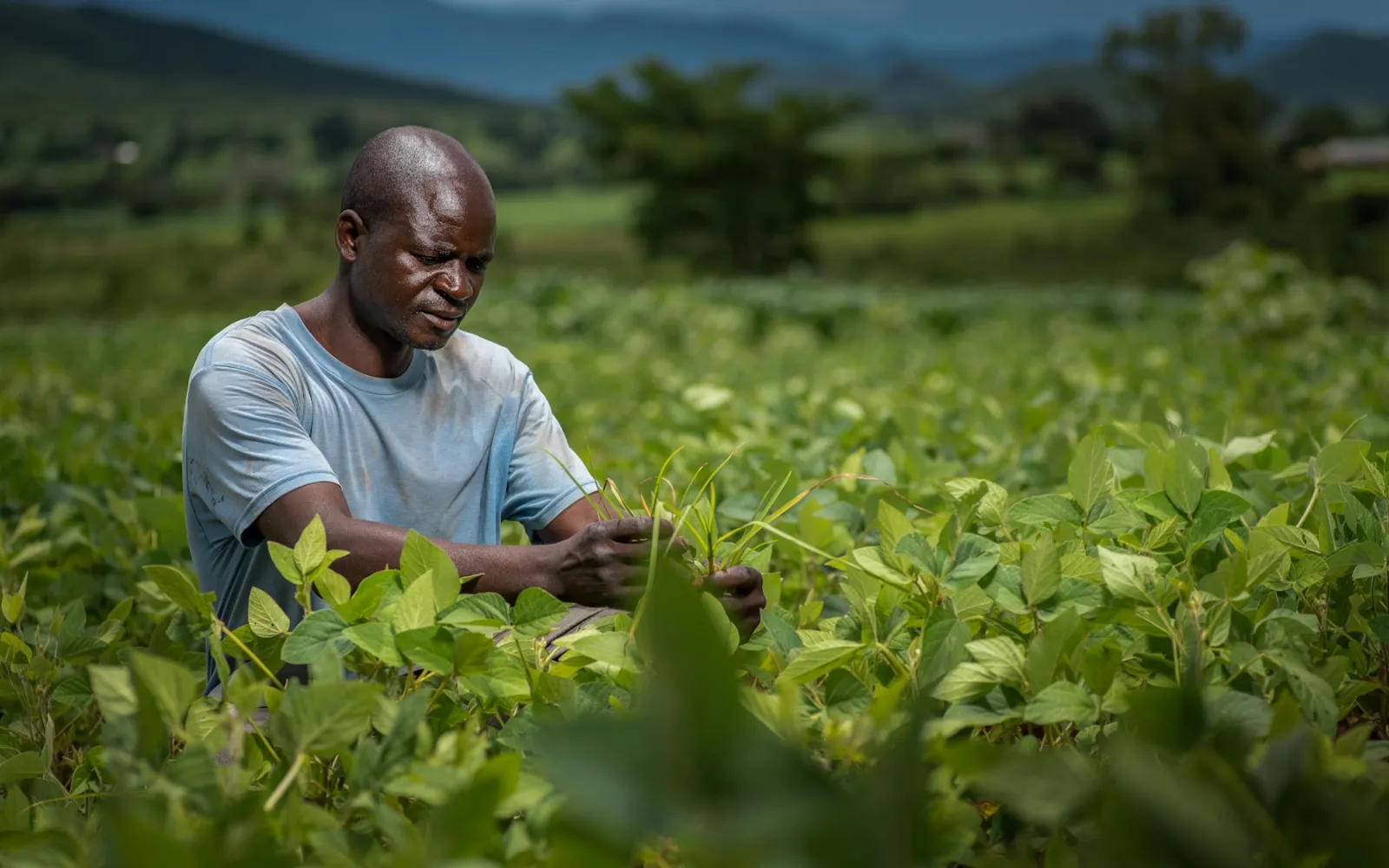
Monitoring, or scouting, means walking through your crop regularly to check which pests are present, how many there are and how much damage they are causing. When scouting:
- Check plants across the whole field, not just at the edges.
- Turn leaves over, as many insects feed and lay eggs on the underside.
- Look at stems, flowers and fruit as well as leaves.
- Record what you find so you can see whether a problem is growing.
Common insect pests
| Pest | What to look for | Crops often affected |
|---|---|---|
| Aphids | Small, soft-bodied insects in clusters; curled leaves; sticky honeydew and black sooty mould. | Many vegetables, including cabbage-family crops |
| Whiteflies | Tiny white insects that fly up when disturbed; yellowing leaves; honeydew. Some species spread plant viruses. | Tomato and many other vegetables |
| Diamondback moth | Small green caterpillars under leaves; clear “windowpane” feeding patches; stunted heads. | Cabbage, kale and other brassicas |
| Tomato leafminer (Tuta absoluta) | Blotchy leaf mines that turn brown; black droppings; tunnels in stems; exit holes in fruit. | Tomato |
Aphids have many natural enemies, including lady beetles, lacewings, hoverfly larvae and parasitic wasps. Outbreaks of aphids and whiteflies often follow broad-spectrum sprays that kill these beneficial insects. Diamondback moth is known for resistance to several insecticide groups, so starting with clean transplants and scouting weekly are especially important.
Tuta absoluta reached eastern Africa around 2012 and is now widespread in the region, including Uganda. Tomato farmers rank it among their most serious pests. Pheromone traps help detect it early.
Common diseases
Late blight
Late blight affects tomato and potato. It begins as pale to dark, water-soaked spots that spread quickly and turn brown-black, often with white growth on the underside of leaves. It is favoured by high humidity and wet leaves.
Early blight
Early blight usually affects stressed or older plants. It appears first on the oldest leaves as dark spots with concentric rings, giving a “target” pattern.
Bacterial wilt
Bacterial wilt, caused by Ralstonia solanacearum, makes plants wilt while their leaves are still green. Plants may wilt in the afternoon and recover overnight before wilting permanently. A simple check is to place a freshly cut stem in a glass of clear water: a milky stream of ooze indicates the disease. There are no effective chemical controls. Remove infected plants and rotate with non-host crops such as maize, beans or cabbage.
Prevention comes first
- Start with healthy seedlings from a clean nursery.
- Rotate crops so pests and diseases cannot build up in the soil.
- Remove and destroy badly infected plants and crop debris.
- Choose resistant or tolerant varieties where available.
- Protect natural enemies by avoiding unnecessary sprays.
Using crop protection products responsibly
In Uganda, the Agricultural Chemicals (Control) Act requires agricultural chemicals to be registered and used in a manner consistent with their labelling. The Ministry of Agriculture, Animal Industry and Fisheries (MAAIF) publishes a register of agricultural chemicals. Only use registered products, follow the label exactly and wear the protective equipment it specifies.
This article is for identification and general guidance only. It does not recommend specific products, doses or spray schedules. If you are unsure what is affecting your crop, take a sample to an agronomist, extension officer or plant clinic before treating it.
References
- UC Statewide IPM Program. What is integrated pest management? (external site)
- FAO. Integrated pest management (external site)
- UC Statewide IPM Program. Pest Notes: Aphids (external site)
- UC Statewide IPM Program. Pest Notes: Whiteflies (external site)
- University of Wisconsin–Madison Extension. Diamondback moth (external site)
- Aigbedion-Atalor et al., Journal of Economic Entomology (2019). The South America tomato leafminer in Africa (external site)
- CABI. Tuta absoluta: a training manual for extension workers (PDF) (external site)
- UC Statewide IPM Program. Late blight (external site)
- UC Statewide IPM Program. Early blight (external site)
- NC State Extension. Bacterial wilt of tomato (external site)
- Uganda Legal Information Institute. Agricultural Chemicals (Control) Act (external site)
- MAAIF. Agrochemicals list (external site)