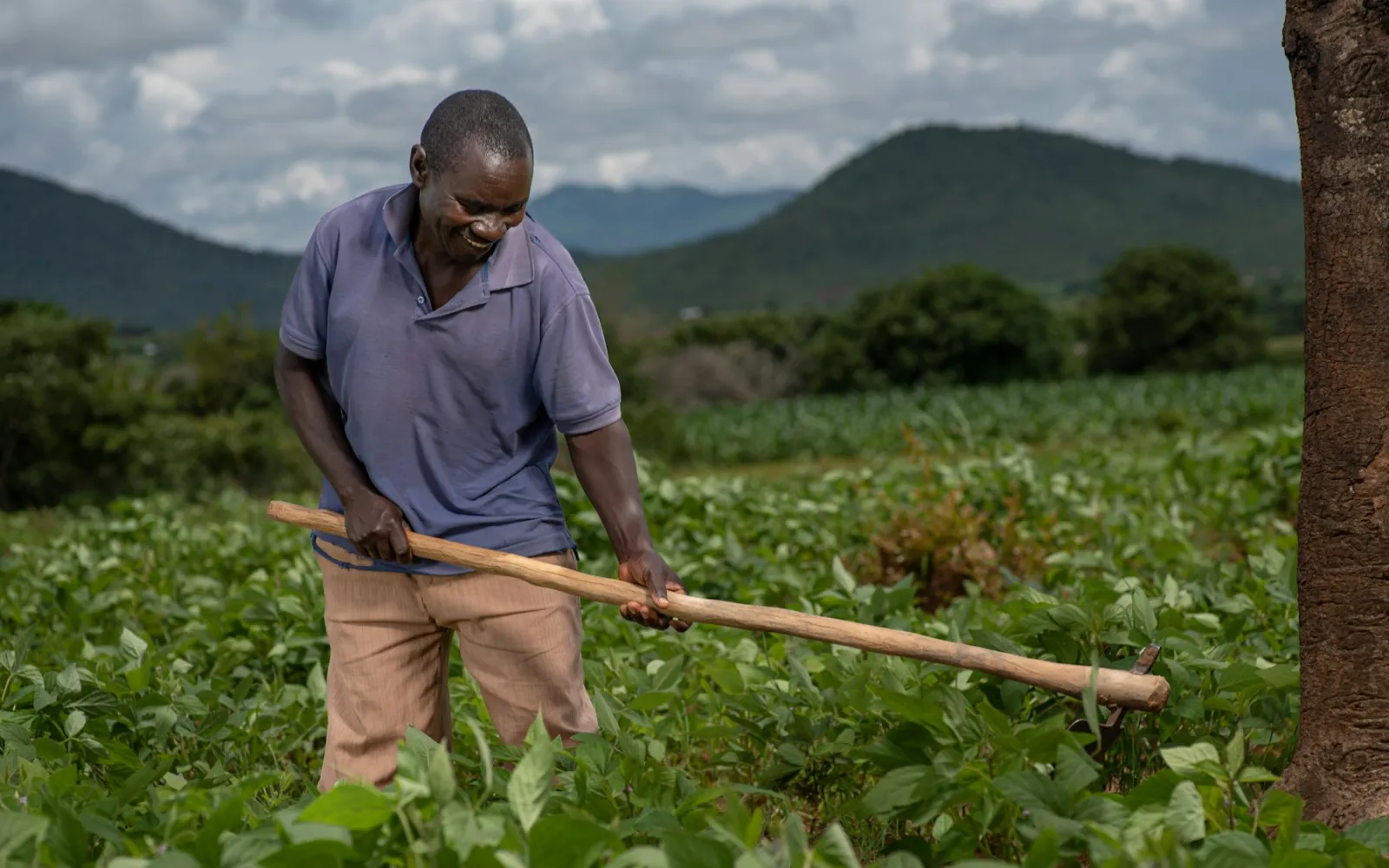
Improving productivity does not always mean spending more. Many of the biggest gains come from doing the basics well and at the right time: good seed, healthy soil, timely weeding, careful handling and simple records.
Start with quality seed
FAO puts it simply: it is impossible to harvest good crops with bad seeds. Quality seed of a variety that is well adapted to your area is one of the most important investments you can make. Buy from reliable suppliers and plan ahead so that seed is available when you need to plant.
Look after your soil
Healthy soil supports strong crops. FAO’s “Save and Grow” approach combines healthy soil, crop rotation and a variety of crops, well-adapted varieties, integrated pest management and efficient use of water. Rotating crops and keeping the soil covered help protect it from erosion.
Weed early
Weeds compete with crops for water, nutrients and light, and they do the most damage early in the season. Each crop has a “critical period” during which keeping it weed-free matters most. Research on tomatoes, for example, found this period to fall roughly between three and six weeks after transplanting. The exact timing varies with weed species, weather and soil fertility, so use it as a guide and keep young crops clean.
Use mulch to save water and reduce weeds
Mulch is a layer of material spread over the soil around plants. It offers several benefits:
- Keeps moisture in the soil.
- Suppresses weeds.
- Reduces leaching of nutrients.
- Keeps the soil cooler.
- Reduces fruit rot and mud splash, which can spread disease.
Organic mulches such as dry grass or crop residues also add organic matter as they break down, improving the soil’s ability to hold water.
Keep simple farm records
Records show you which crops and varieties pay off, what your true production costs are and how pest problems change over time. They can also support a loan application. A simple field notebook is enough to start.
| Record | Why it helps |
|---|---|
| Planting dates and varieties | Compare performance and plan future seasons. |
| Inputs used and when | Understand costs and what worked. |
| Pest and disease observations | Spot patterns and act earlier next time. |
| Harvest quantities | Measure yield and progress. |
| Sales and expenses | Know your real profit. |
Reduce losses after harvest
FAO estimates that 13.3% of food was lost between harvest and retail in 2023. Sub-Saharan Africa had the highest regional losses, at 23.0%, and fruits and vegetables were the most affected group. In developing countries, the most common causes are rough handling and poor temperature management.
- Harvest during the coolest part of the day.
- Keep harvested produce in the shade.
- Handle produce gently, as bruises let in rot and speed up water loss.
- Sort out damaged produce and use suitable packaging.
Learn with other farmers
Farmer Field Schools bring groups of farmers together through a season for hands-on learning and field experiments. FAO reports that they have reached more than 10 million farmers worldwide. Local farmer groups and extension services are a valuable way to share what works in your area.
Practices that work well on one farm may need adjusting on another. Speak to an agronomist or extension officer for advice suited to your crops, soil and climate.
References
- FAO Climate-Smart Agriculture Sourcebook. Climate-smart crop production practices and technologies (external site)
- FAO (2011). Save and Grow (PDF) (external site)
- University of Georgia Extension. Mulching vegetables (external site)
- UMass Amherst Vegetable Program. Critical period of weed control (external site)
- University of Maryland Extension. Start record keeping today (external site)
- FAO SDG Indicators Data Portal. SDG 12.3.1 Global food losses (external site)
- FAO. Small-scale postharvest handling practices (external site)
- FAO. Global Farmer Field School Platform (external site)