A crop can only be as strong as the seedlings it starts from. Seedlings that are raised with care establish faster after transplanting, cope better with stress and are less likely to carry disease into the field. The practices below are simple, low-cost and suitable for small and medium vegetable farms.
Choose and prepare the nursery site
Raise seedlings on a well-drained site that gets good light. If you use a nursery bed, keep it about one metre wide so you can reach the centre without stepping on the soil. Avoid ground where tomato, eggplant or potato have grown in the last three years, because diseases of these crops can survive in the soil.
- Mix well-decomposed compost into the bed to improve structure and drainage.
- Never use fresh manure on a seedbed, as it can burn young seedlings.
- Consider solarising the bed before sowing: covering moist soil with clear plastic and letting the sun heat it helps reduce many seedling diseases and weed seeds.
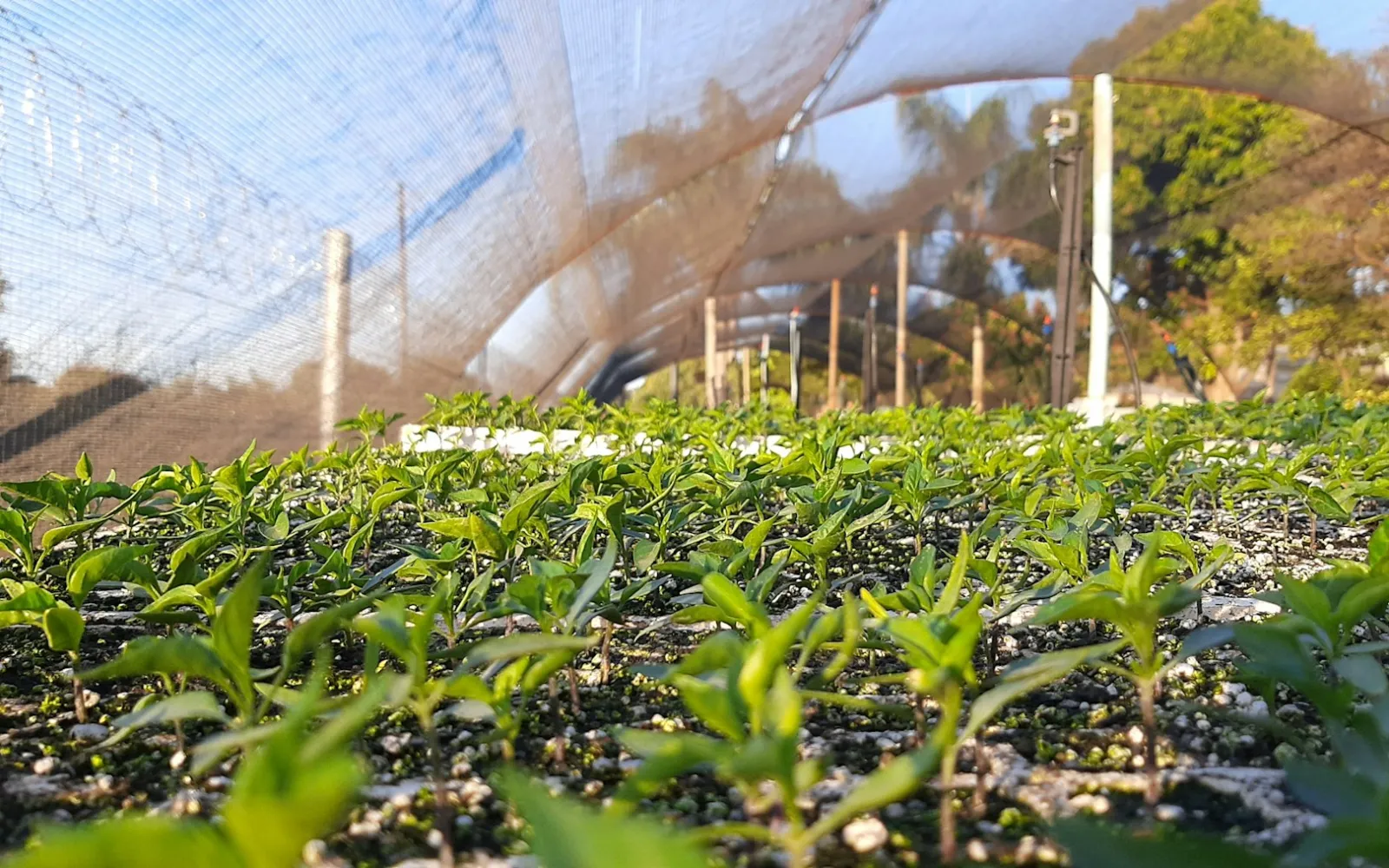
- If you use trays, choose ones with a separate cell for each seedling and drainage holes in every cell. Seedlings sharing one container tangle their roots, which are then damaged at transplanting.
Sow good seed and care for young plants
Fresh seed from a reliable supplier germinates better, because germination falls as seed ages. Store any leftover seed sealed, cool and dry.
After sowing, cover the seed lightly, firm the soil gently and water. A light mulch helps keep the surface moist; pull it back as soon as seedlings emerge so they receive full light. Seedlings that grow tall, thin and weak are usually not getting enough light.
Young seedlings do not need fertiliser until they have developed several true leaves. When you handle them, hold them by a leaf or the root ball, never by the stem. A damaged leaf will be replaced, but a crushed stem or growing tip may not recover.
Prevent damping-off
Damping-off is one of the most common causes of seedling loss. It is caused by soil-borne organisms including Pythium, Rhizoctonia and Fusarium, and it can wipe out whole sections of a seedbed or tray. Seeds may fail to emerge, or seedlings develop soft, water-soaked stems at the soil line that become thread-thin and collapse.
The disease thrives in cool, wet conditions and is made worse by low light, overwatering, excess fertiliser and cold growing media. Prevention is far easier than cure:
- Use clean, well-drained growing media rather than ordinary garden soil in trays.
- Clean and sanitise trays and tools between batches.
- Keep the growing medium moist but never waterlogged.
- Give seedlings good light and air movement.
Once damping-off appears it is difficult to stop. Remove affected seedlings, let the surface dry slightly between waterings and improve airflow and light to slow its spread.
Harden off and transplant
Seedlings raised in shade or under cover need time to adjust to full sun and wind. Hardening off means gradually increasing their exposure over several days. Seedlings that skip this step can suffer leaf scorch, wilt and die after transplanting. Reducing watering for about a week before transplanting also helps toughen them.
Tomato seedlings are generally ready to transplant when they have three to five true leaves. Transplant on a cloudy day or late in the afternoon to reduce stress, and water the seedlings well before lifting them.
Quick troubleshooting guide
| What you see | Likely cause | What to do |
|---|---|---|
| Tall, thin, pale seedlings | Too little light | Move to a brighter position and avoid crowding. |
| Stems collapse at the soil line | Damping-off | Remove affected plants, reduce watering, improve airflow and light. |
| Slow or patchy germination | Old or poorly stored seed, or overly wet media | Use fresh seed and keep media moist, not soggy. |
| Leaves scorch after transplanting | Seedlings not hardened off | Harden off gradually before moving to the field. |
Every farm is different. For advice on the varieties and timings that suit your area, speak to an agronomist or your local agricultural extension officer.
References
- Feed the Future Innovation Lab for Horticulture, UC Davis. Seedling nurseries (external site)
- University of Minnesota Extension. Starting seeds indoors (external site)
- University of Minnesota Extension. How to prevent seedling damping off (external site)